


In a workshop, we go through the entire design thinking process together with the team. We set methodological priorities with a view to the individual design challenge.
Design
Thinking
Workshop
or Sprint?
Overview
In this article, you’ll learn when a 2–3‑day workshop is the best choice and when a 4–5‑day sprint format is the better fit.
Boost your project work with design thinking
When a project kicks off, it often becomes clear surprisingly quickly that there are very different opinions about what the first concrete steps should be, how the team should prioritize topics, or which areas deserve the most focus. Because day‑to‑day operational pressure is already high, the team tries to resolve these questions "somehow" and "on the side".
The result is usually a lack of alignment: side conversations spiral, meetings drag on without producing tangible outcomes, and the project never gains the momentum everyone hoped for. Instead of moving forward, the team gets bogged down in exhausting coordination loops and a shared sense of stagnation. To prevent this dynamic and set projects on the right track from the very beginning, we rely on Design Thinking.
In a sprint, we combine design thinking with methods from team building and futures thinking. Within a week, we work with teams on team dynamics and rules for collaboration.
Strengths and benefits
We look ahead, explore possible futures, and align teams around a shared strategic direction. We dive into the world of users, uncover new perspectives, and develop innovative ideas. We translate these ideas into prototypes, test them with users, and iterate based on what we learn.
We use the Design Thinking sprint format to propel a project forward in just one week. A sprint gives the team the space to fully immerse themselves in the topic while involving all relevant stakeholders – from experts to end users – in a co‑creative process that leads to solutions everyone can stand behind. Depending on the project’s needs, we set different thematic or methodological focus areas throughout the sprint. But no matter where the emphasis lies, every sprint ends with a prototype that has already gone through a complete feedback loop and a first round of iteration.
Design Thinking sprints accelerate projects dramatically, bring all perspectives to the table, and create clarity and focus. They foster co‑creation, engage the right stakeholders, validate hypotheses and solutions through an initial closed iteration cycle, strengthen team cohesion, and eliminate unnecessary discussions and inefficient meetings.
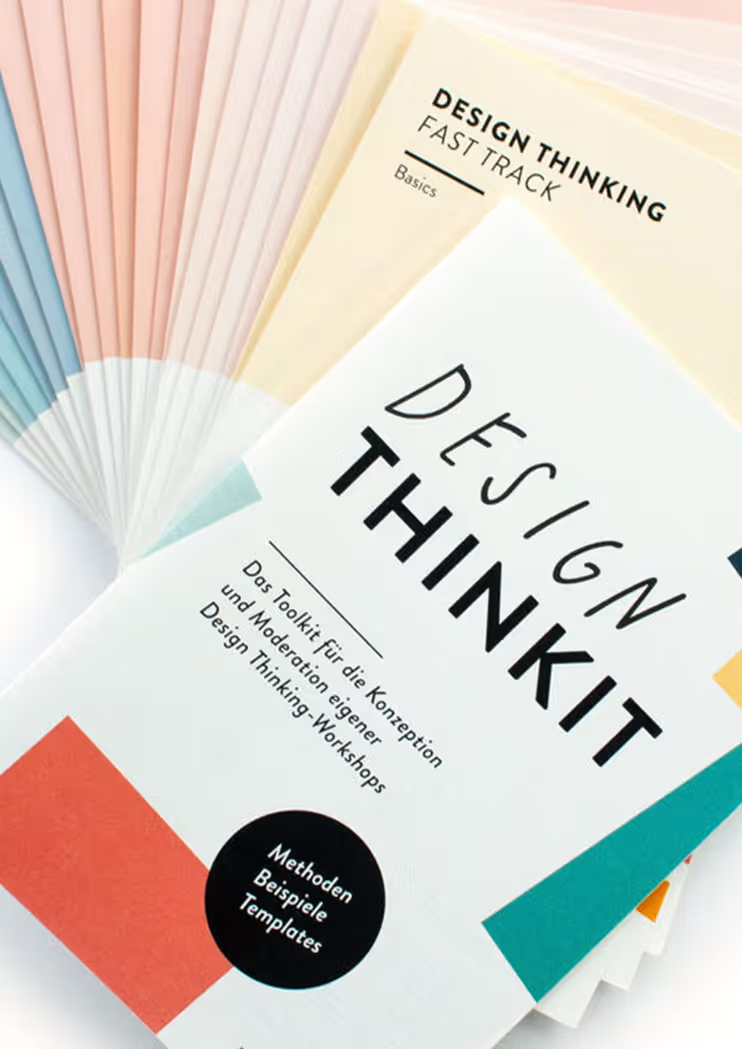
Want to know more? You can find information about design thinking at
Design-Thinkit.de
Discover more
From current projects to selected case studies and inspiring methods. Explore how we work and the formats we use.

Events
Speculative futures for autonomous mobility in the Laboratory for Innovation Culture.
Interested?
Simply write us a message in the contact field. Or send us an email:
hallo@berliner-ideenlabor.deThank you! Your submission has been received!
Oops! Something went wrong while submitting the form.
Let’s Co-Create Futures
